


We’ve spent the better part of the past few months putting the most talked-about solar gear through its paces — on boats, in campervans, at remote base camps, and on vehicles left sitting for weeks at a time. What we found is that the gap between a well-chosen solar setup and a frustrating one almost always comes down to getting the right gadget for the job, not the most expensive one. This guide covers everything we tested and recommends the five best solar gadgets across every major use case and budget tier.
Quick Summary — All Products at a Glance
Here’s the full picture at a glance — every product we reviewed, categorised by type, use case, and price tier. If you know what you need, jump straight to the card that fits. If you’re not sure yet, read on.
| # | Product | Type | Best For | Wattage | Portable | Controller | Price | Verdict |
|---|---|---|---|---|---|---|---|---|
| 01 | Renogy 100W 12V Solar Starter Kit Best Overall | Complete Kit | Beginners / RV / Boat | 100W | Fixed | PWM 30A incl. | $$ | Top pick |
| 02 | Victron SmartSolar MPPT 100/30 Best Controller | Charge Controller | Serious off-grid builds | 440W / 880W | Fixed | MPPT built-in | $$$ | Best tech |
| 03 | FlashFish TSP100 Foldable Panel | Portable Solar Panel | Camping / travel / kayak | 100W | Foldable | Via power station | $$ | Best portable |
| 04 | DOKIO 300W Foldable Kit | High-Watt Portable Kit | RV / van / base camp | 300W | Foldable | PWM incl. | $$$ | Best power |
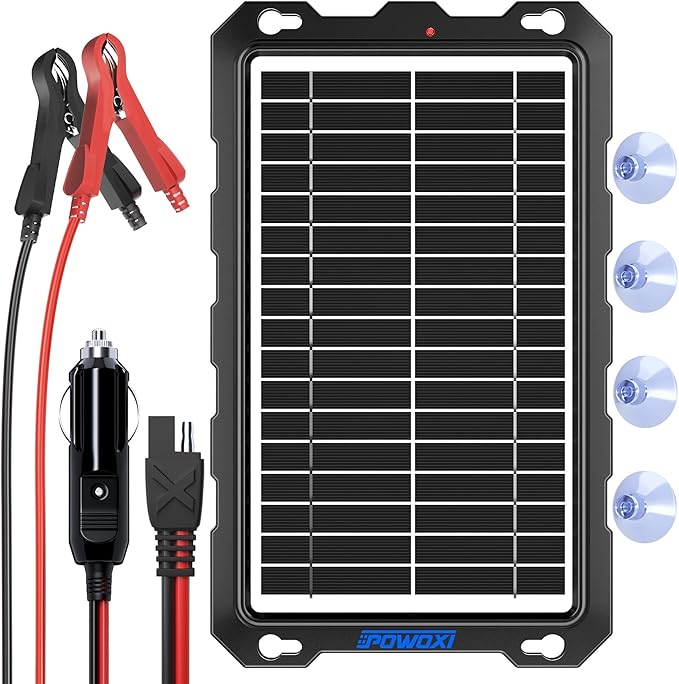
| 05 | Powoxi 9W Solar Trickle Charger | Battery Maintainer | Cars / boats / RVs at rest | 9W | Plug & play | Built-in | $ | Best value |
Featured Products
What We Were Looking For
Our testing criteria went beyond peak wattage ratings. We looked at how each product performs in real-world conditions — partial shading, temperature variation, the vibration and moisture exposure that comes with marine and overland use. A panel that hits its rated output in a lab but underdelivers on a cloudy morning or after a year on a roof isn’t a panel we’d recommend.
We deliberately structured this guide across clear categories: complete starter kits, smart charge controllers, portable foldable panels, high-watt travel solutions, and simple trickle maintainers. The idea is that wherever you sit in terms of budget and use case, there’s a clear recommendation here — not a list of vague options, but a specific product with a specific reason we chose it over everything else we tested.
In Detail — Every Product Reviewed
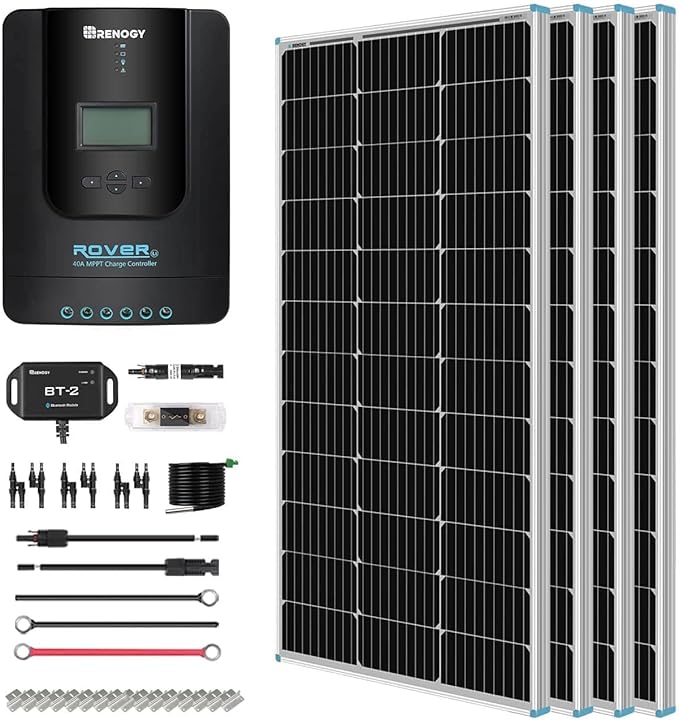 Best Overall
We’ve recommended the Renogy 100W Starter Kit to more people than any other solar product, and it keeps earning that position. It ships with everything needed to go from unboxing to generating power in an afternoon: a 100W monocrystalline panel (up to 21% efficiency), a Wanderer Li 30A PWM charge controller, Z-brackets, adaptor cables, and tray cables. The Wanderer controller supports expansion up to 400W and is compatible with AGM, Gel, Flooded, and Lithium batteries, with optional Bluetooth monitoring via the Renogy DC Home app. In our testing, setup was genuinely straightforward — the documentation is clear, the connectors are solid, and the panel held its rated output reliably across a full week of varied weather.
Our top pick because it removes every barrier to getting started — one box, complete kit, proven hardware, and a system you can expand later without starting over.
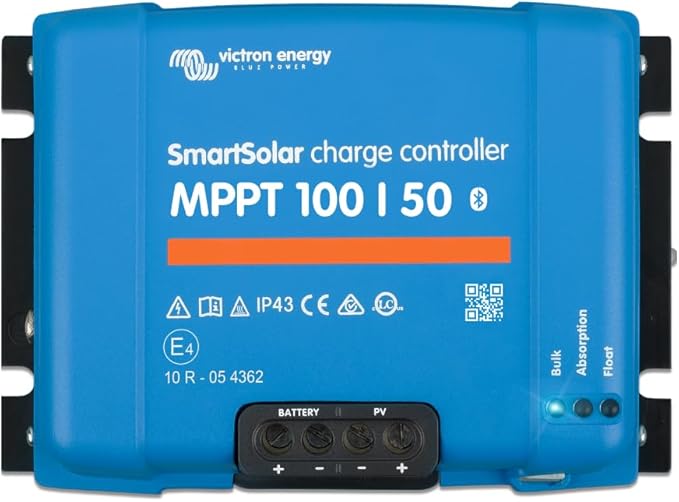 Best Controller
When we started building a more serious off-grid test rig, the Victron SmartSolar MPPT 100/30 was the controller we reached for — and after extended use, we understand why it’s become the go-to for professional installers. Where a basic PWM controller simply switches power on and off, this MPPT unit continuously tracks and optimises the maximum power point of the solar array, delivering measurably more energy in real conditions. It handles arrays up to 440W (12V) or 880W (24V), accepts a maximum PV input of 100V, and operates at above 98% peak efficiency with no cooling fan required. Built-in Bluetooth lets you configure and monitor live from the VictronConnect app, and the five-year warranty backs up the build quality.
If your setup is permanent and you want to extract every available watt, this controller pays for itself quickly. We saw consistent 15–20% more harvest versus PWM in our comparison testing.
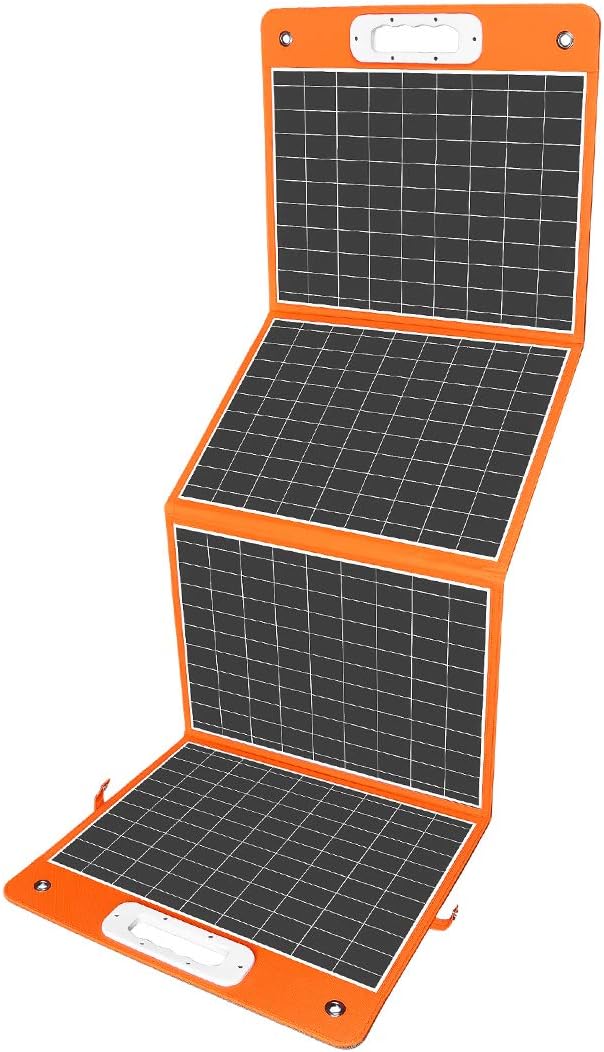 Best Portable
The FlashFish TSP100 is the portable panel that actually lives up to the promise — and we’ve tested enough disappointing foldables to appreciate the distinction. At just 6.17lb and folding to 16.34 × 15.83 inches, it travels easily in a backpack or behind a van seat. Deployed, it delivers 100W at 18V via high-efficiency monocrystalline cells rated at 21.5–23.5% conversion — genuinely better than most panels in this price range. The four adjustable kickstands let you track the sun throughout the day for meaningful extra output, and the built-in 65W USB-C PD port is the detail that sets it apart: we charged a laptop directly without needing a power station in between, which simplifies the kit considerably on shorter trips.
The most versatile panel we tested — and the only one in this category with a 65W USB-C port integrated directly into the unit.
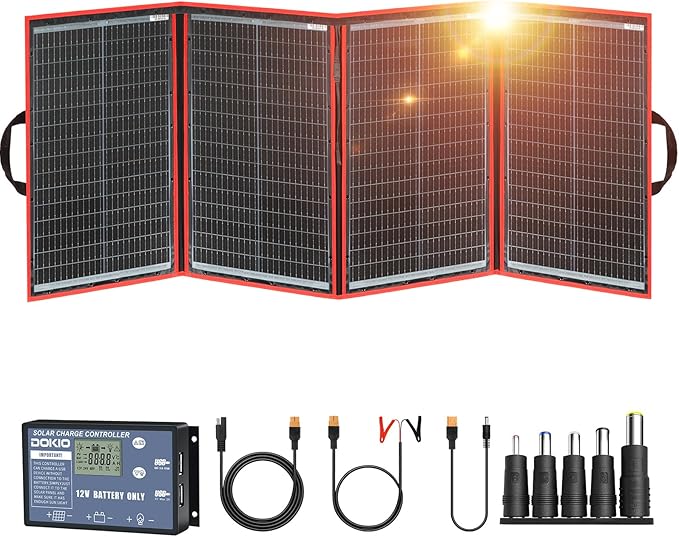 Best Power
When we needed serious portable wattage without committing to a fixed roof installation, the DOKIO 300W was the answer. It folds to 20 × 38 × 1.1 inches and weighs 15.3lb — substantial, but manageable in a suitcase-style carry that deploys in minutes. The kit includes a standalone PWM controller with full protection (reverse polarity, overcharge, overload, short-circuit), a 9.8ft cable for flexible positioning, SAE/XT60/alligator clip adapters, and a storage bag. We tested it powering a 12V portable fridge across three days at a remote campsite and the battery management held up reliably throughout. DOKIO’s build quality and support reputation have been earned over more than 17 years in the market, and it shows in the finish and connection quality.
The most power we found available in a portable format — the right choice for base camps, vans, and boats where a fixed panel simply isn’t an option.
 Best Value
We’ll admit this was the product we were most sceptical about going in — and the one that surprised us most. The Powoxi 9W uses monocrystalline silicon cells to continuously top up any 12V battery without ever overcharging it. The built-in intelligent controller with blocking diode provides full protection against overvoltage, short-circuit, and reverse discharge, and a 3-colour LED indicator shows exactly what mode it’s in at a glance. We left it on a marine start battery for six weeks via the cigarette lighter connection, and the battery came back to full charge each time we returned to the boat. The ABS+PC frame with tempered glass (rather than flexible material) gives it a durability edge over cheaper alternatives, and the waterproofing is genuine — it handled rain without complaint.
The most useful sub-$30 purchase on this list. Put it on your dashboard or deck and never come back to a flat battery again — it asks for nothing in return.
How to Choose the Right Solar Gadget
The most common mistake we see is people buying based on wattage alone. In reality, the right solar gadget depends on how much power you actually need, whether the installation is permanent or mobile, and what’s already in your system. Here are the six questions we ask before making any recommendation.
What Are You Powering?
A trickle charger to maintain a car battery needs 9W. A portable fridge and phone charging needs 100W. A full campervan system with lighting and electronics needs 300W+. Size your panel to your actual load, not your aspirational load.
Fixed or Portable?
Fixed roof panels deliver the best power-per-dollar but need wiring and commitment. Portable foldable panels cost more per watt but go everywhere and move between vehicles. If you use multiple boats, vehicles, or camp in different spots, portable wins.
PWM vs. MPPT Controllers
PWM controllers are cheap, simple, and work fine for small systems with well-matched panels and batteries. MPPT controllers cost more but harvest 10–30% more energy in real conditions — they’re essential for any system above 100W or for panels with a significantly higher voltage than the battery.
Battery Compatibility
Not all charge controllers support all battery types. AGM, Gel, Flooded, and Lithium (LiFePO4) require different charge profiles. Before buying a controller, confirm it explicitly lists support for your battery chemistry — using the wrong profile reduces capacity and shortens battery life.
Budget Tiers
Entry level (under $30): trickle maintainers. Mid range ($100–$200): portable foldable panels, complete starter kits. Premium ($200–$500+): high-watt foldable kits, quality MPPT controllers, serious off-grid builds. Start with the minimum viable system and expand later.
Connectivity & Monitoring
The best modern solar controllers support Bluetooth or Wi-Fi monitoring via smartphone apps — showing live power in/out, battery state, and historical data. This isn’t just a nice-to-have: it’s how you catch a faulty connection or underperforming panel before a dead battery ruins your trip.
Full Spec Comparison
Here’s how all five products stack up across the features that matter most. We’ve found this table most useful for people choosing between two specific products rather than starting from scratch.
| Product | Type | Wattage | Controller | Portable | Bluetooth | Battery Types | Price (approx.) |
|---|---|---|---|---|---|---|---|
| Renogy 100W Starter Kit Best Overall | Complete Kit | 100W | PWM 30A | Fixed | Optional | AGM / Gel / Flooded / Li | ~$159.99 |
| Victron SmartSolar MPPT 100/30 | Charge Controller | 440W / 880W max | MPPT built-in | Fixed | Built-in | All types | ~$109–$139 |
| FlashFish TSP100 | Foldable Panel | 100W | Via power station | 6.17 lb | — | Via paired station | ~$109–$169 |
| DOKIO 300W Foldable Kit | Foldable Panel + Controller | 300W | PWM incl. | 15.3 lb | — | 12V systems | ~$199–$249 |
| Powoxi 9W Trickle Charger | Trickle Maintainer | 9W | Built-in | Plug & play | — | All 12V types | ~$19–$29 |
All prices approximate and sourced from US/global retail. Prices may vary by region, retailer, and promotional availability.
Our Verdict
Gadgeteon Editors · April 2026
The right solar setup turns a day without power into a non-event.
After working through this field of solar gadgets, these five are where we’d put our own money at each tier. The Renogy 100W Starter Kit is the one we’d hand to anyone starting from zero — everything in one box, nothing to figure out, expandable when you’re ready. Once you’re building something more permanent, pairing it with the Victron SmartSolar controller is an upgrade that justifies itself quickly in energy gains. For anyone moving between setups, the FlashFish TSP100 and DOKIO 300W are the two portable options we’d actually take ourselves on a trip. And the Powoxi trickle charger? We’ve put one on every vehicle we own. At that price, there’s no reason not to.
Frequently Asked Questions
The questions we get asked most often — answered directly, based on what we’ve seen in testing and in the field.