
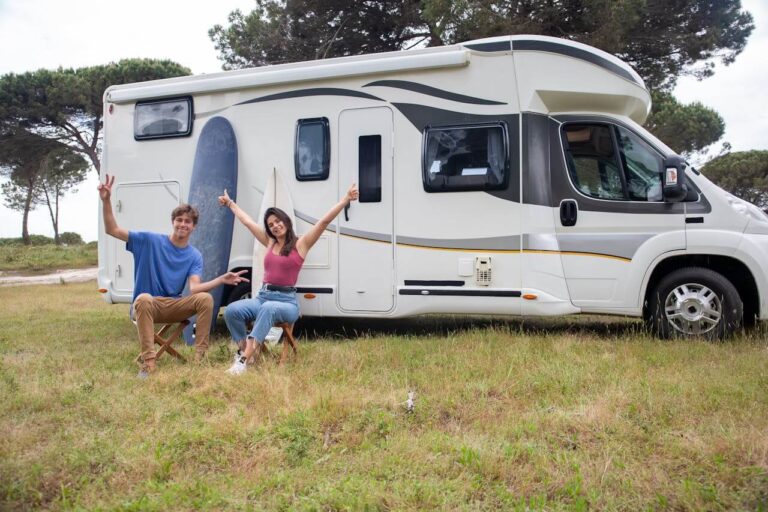

Most lists of the best motorhome gadgets are written by people who’ve never set foot in an RV. This one isn’t. Over the past year we’ve driven, camped, and lived out of motorhomes long enough to know which gadgets genuinely earn their place — and which ones go straight into a cupboard and stay there. These 10 picks span safety, power, connectivity, and everyday comfort. Whether you’re buying your first motorhome or upgrading a well-worn rig, there’s something here that will change the way you travel.
Quick Summary — All 10 Gadgets at a Glance
The full picture at a glance. These are the best motorhome gadgets across every category and price tier — from a sub-$30 safety essential to a $1,000+ portable power station that genuinely replaces shore hookups. If you know what category you need, jump straight to the product card below.
| # | Product | Category | Best For | Price | Verdict |
|---|---|---|---|---|---|
| 01 | Progressive Industries EMS-HW30C Safety Pick | Surge Protector | All motorhomes on hookups | $$$ | Must-have #1 |
| 02 | Tymate TM12 TPMS Road Safety | Tire Monitoring | Blowout prevention | $$ | Best TPMS |
| 03 | Furrion Vision S Wireless Backup Camera | Backup Camera | Reversing & manoeuvring | $$$ | Best camera |
| 04 | Jackery Explorer 1000 Pro | Portable Power Station | Off-grid & dry camping | $$$$ | Best power |
| 05 | Renogy 3000W Pure Sine Inverter | Power Inverter | Running AC appliances | $$$ | Best inverter |
| 06 | weBoost Drive Reach RV | Signal Booster | Remote & rural travel | $$$$ | Best signal |
| 07 | Renator M11-0660R Pressure Regulator | Water Pressure Regulator | All hookup connections | $ | Best value |
| 08 | Camco TastePURE Water Filter | RV Water Filter | Drinking water safety | $ | Essential buy |
| 09 | Camco RV Leveling Blocks + Wheel Chocks | Leveling & Stabilisation | Level pitches everywhere | $ | Never leave without |
| 10 | LED Motion Lights / Headlamp / Magnetic Hooks | Small Essentials Kit | Daily RV life | $ | Cheapest wins |
Jump to a Category
What Makes a Great Motorhome Gadget?
The best motorhome gadgets share a simple quality: they solve a problem you didn’t know you had until it was too late. The RV owner who skips a surge protector learns the hard way after one bad campsite hookup destroys their air conditioning unit. The driver who doesn’t run a TPMS finds out about a slow tyre leak at 60mph rather than at the service station. We built this guide around prevention as much as convenience.
We’ve also been deliberate about covering every budget tier. Not every motorhome owner needs a $1,000 portable power station — but everyone, without exception, needs a water pressure regulator and a set of levelling blocks. The cheap stuff sometimes matters more than the expensive stuff. We call that out clearly in each recommendation.
In Detail — All 10 Best Motorhome Gadgets Reviewed
 Safety Must-Have
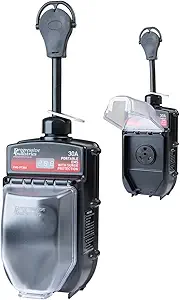
This is the single most important motorhome gadget on this list, and we’d argue it’s the one to buy before anything else. The Progressive Industries EMS-HW30C is a hardwired Electrical Management System rated at 30A / 120V / 3,600W, absorbing surges up to 1,790 joules with a response time under one nanosecond. Beyond surge protection, it actively monitors for the faults that actually damage RV electronics in campsite conditions: over/under voltage, open ground, open neutral, reverse polarity, and miswired pedestals — all with a built-in time delay to protect air conditioning compressors from restart damage. A scrolling digital display shows live voltage, current, and frequency, and any fault code that triggered a disconnect. Progressive Industries backs it with a lifetime warranty and manufactures it in the USA.
Campsite power quality varies enormously. One bad hookup can destroy your refrigerator, air conditioning unit, and TV in seconds. This EMS pays for itself the first time it saves you from a repair bill.
 Road Safety
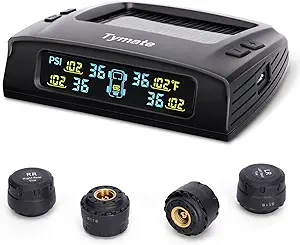
A tyre blowout in a motorhome is one of the most dangerous incidents that happens on the road — and it’s almost always preceded by a slow leak that a good TPMS would have caught. The Tymate TM12 supports up to 12 sensors simultaneously, making it suitable for even large multi-axle motorhomes with a towed vehicle. It monitors pressure across a range of 0–116 PSI with six real-time alarm modes: high pressure, low pressure, rapid leakage, high temperature, low sensor battery, and signal loss. The monitor charges via USB-C or its built-in solar panel and plugs into the cigarette lighter for power — no wiring required. A colour LCD display with automatic backlight adjustment keeps readings legible in all conditions, day or night. Setup is plug-and-play with pre-paired sensors, and the system includes a repeater for long rigs where signal distance might otherwise be a concern.
One of the highest-impact safety upgrades available for any motorhome — the gap between a tyre that’s 15 PSI low and a catastrophic blowout is often just a few miles.
 Best Camera
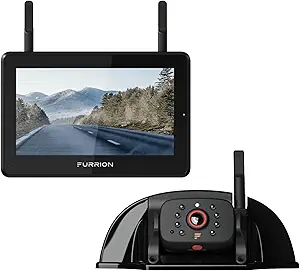
Reversing a motorhome without a dedicated backup camera is something you only do until you’ve had your first close call. The Furrion Vision S is the system the RV industry has converged on as the benchmark — it broadcasts a live wide-angle HD feed wirelessly to a dedicated 7-inch monitor, eliminating the cable run that makes wired systems a DIY headache. The camera mounts to the rear of the motorhome with a pre-installed Furrion camera port (standard on many newer rigs) or with the included surface mount bracket. The image quality is notably better than cheaper alternatives, particularly in low light, and the wireless connection has been reliable in our testing even in crowded campsites with interference from neighbouring systems. Multiple cameras can be linked to a single monitor — useful for side blind-spot coverage on wider Class A motorhomes.
Fitting a quality backup camera reduces the anxiety out of every reversing manoeuvre and tight pitch approach, and prevents a category of damage — reversing into obstacles — that’s disproportionately common with new motorhome owners.
 Best Power
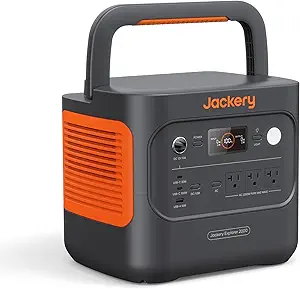
Dry camping — nights without hookups — is where the best motorhome trips happen, and the Jackery Explorer 1000 Pro is the power station that makes it viable for days at a time. It packs a 1,002Wh LFP battery into a 11.5kg unit, outputting up to 1,000W AC (2,000W surge) through three AC outlets, two USB-C ports at 100W PD each, two USB-A, and a 12V DC car port. What separates it from cheaper power stations is the charge speed: it reaches 80% from a wall outlet in around an hour, and it accepts up to 200W from solar panels for off-grid recharging. We ran a 12V camping fridge, LED lighting, and phone charging from it continuously for 36 hours without reaching empty. The LFP battery chemistry gives it a 10-year (3,000 cycle) lifespan — substantially longer than the lithium-ion alternatives at this price point.
The bridge between motorhome ownership and genuine off-grid freedom. Pair it with a solar panel and you have unlimited nights without hookup fees.
 Best Inverter
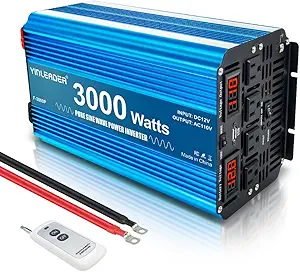
A power inverter converts the 12V DC from your motorhome batteries into the 110/120V AC that your kettle, microwave, coffee machine, or laptop charger expects. The Renogy 3000W Pure Sine Wave Inverter is the one we’d choose for a permanent installation in a motorhome electrical system. “Pure sine wave” matters here: it produces the same clean AC waveform as shore power, making it safe for sensitive electronics and appliances with variable motors — unlike cheaper modified sine wave inverters, which can damage certain devices and cause appliances to run hot. At 3,000W continuous output (6,000W surge), this handles virtually any typical motorhome appliance load. It connects directly to the battery bank, includes USB charging ports, LED indicator display, and protections against over-temperature, over-voltage, low voltage, and short circuit.
The essential link between your battery bank and your everyday appliances. If you have a portable power station already, you may not need this — but for built-in battery systems, it’s indispensable.
 Best Signal
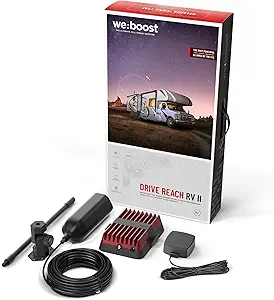
The weBoost Drive Reach RV is the benchmark signal booster for motorhomes, and it earns that position by working where cheaper boosters give up. It amplifies the incoming cellular signal from the nearest tower using a roof-mounted directional antenna, then rebroadcasts it inside the vehicle at up to 50 dB gain — boosting data speeds and call quality on all US carriers simultaneously. Unlike many competitor systems, the Drive Reach is designed specifically for RVs rather than repurposed from a car kit: the outside antenna mounts on an included telescoping pole for use while parked (raising it above the vehicle body makes a measurable difference), and the inside antenna covers the full motorhome interior. We tested it on remote routes in Montana and coastal Oregon — areas where our phones showed no signal — and consistently achieved enough connection for navigation, messaging, and basic streaming.
Remote camping is where the best motorhome destinations are. This booster makes those destinations feel a little less disconnected without making them feel like city campgrounds.
 Best Value
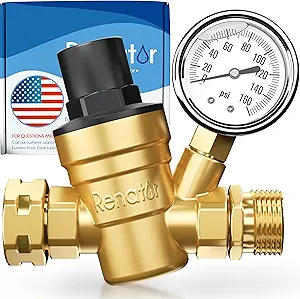
This is the motorhome gadget with the best damage-prevention-to-cost ratio on the market. Campsite hookup pressure can vary wildly — from a trickle to 150 PSI or more — and most RV plumbing is designed for 40–60 PSI. Above that, you risk burst pipes, damaged fittings, and failed pump seals. The Renator M11-0660R connects between the campsite supply and your motorhome’s water inlet in seconds, regulating output to a safe 45–65 PSI range. Its built-in gauge lets you see the input and output pressure at a glance, which is also useful for diagnosing low-pressure issues at poorly supplied sites. The solid brass construction and wide hose thread compatibility make it a genuinely durable purchase rather than a plastic throwaway — we’ve been running the same unit for two seasons without a sign of wear.
At under $30, this is the cheapest insurance policy on the entire list. Replacing a ruptured water line inside a motorhome costs hundreds. There’s no reason not to own one.
 Essential Buy
Not all campsite water is created equal. Even when a site is connected to treated mains supply, the hose connection, holding tank, and onboard pipework can introduce taste, odour, sediment, and chlorine that makes drinking straight from the tap unpleasant — or, in older systems, genuinely inadvisable. The Camco TastePURE is an in-line granular activated carbon filter that screws directly between your hose and water inlet. It reduces chlorine taste and odour, sediment, and certain contaminants to a level that makes the onboard water genuinely palatable. The flexible hose protector prevents stress cracks at the connection point, which is the failure mode that kills cheaper filters. At this price, replacing it at the start of each season is a trivial expense. We keep two: one in the kit bag and one already fitted.
A simple and inexpensive upgrade that changes the quality of every cup of coffee and every glass of water you drink on the road.
 Never Leave Without
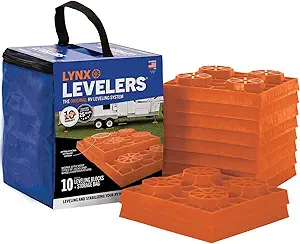
This is the first thing that goes into the motorhome and the last thing that comes out. Every pitch — even “level” ones — needs some adjustment, and trying to sleep, cook, or shower in a motorhome that’s sitting slightly off-level is genuinely miserable. Camco’s interlocking levelling blocks stack in multiple configurations to raise any wheel by the precise amount needed, and they’re made from high-density polyethylene that won’t compress, crack, or deform under the weight of a Class A motorhome. Pair them with heavy-duty rubber wheel chocks to prevent rolling once you’re on the blocks — this matters on any pitch that isn’t dead flat, which is most of them. Both products live in a storage bag under the bed and come out every single night. If you’re new to motorhoming, buy these before you buy anything else on this list.
The difference between a good night’s sleep and a miserable one often comes down to levelling. These are the products that make it quick and repeatable every time.
 Best Small Kit
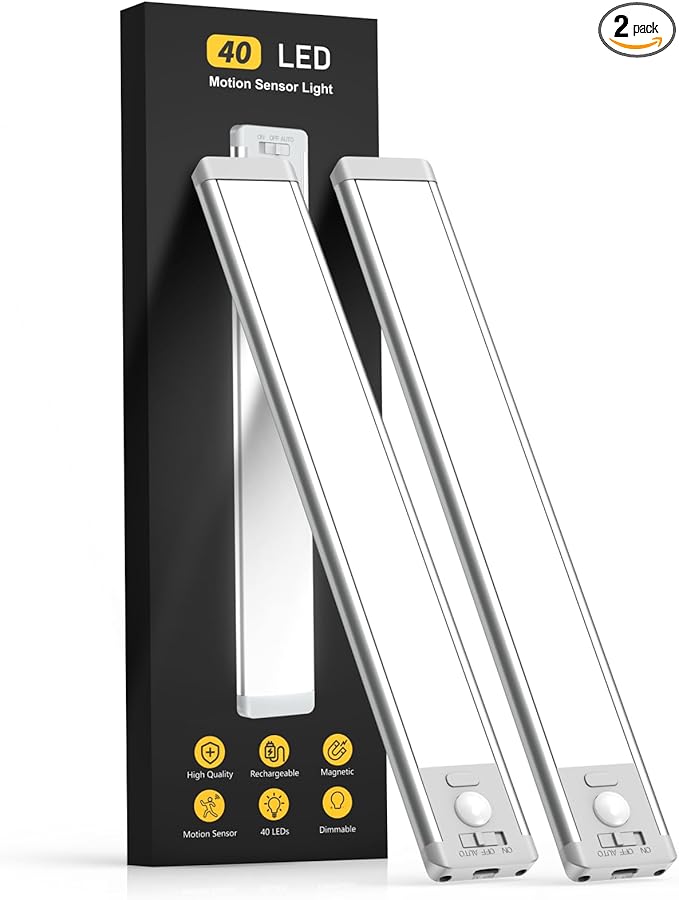
Three small motorhome gadgets that consistently earn their place in our kit bag. USB-powered LED motion sensor lights are the simplest upgrade to the inside of any motorhome — stick one in the bathroom, one under the entry step, and one in a storage bay, and you’ll never fumble for a switch in the dark again. A rechargeable LED headlamp is the most practically useful piece of lighting you can own for any roadside issue, pitch setup in the dark, or under-bonnet problem — we keep one charged in the cab door pocket at all times. And heavy-duty magnetic hooks are a revelation in a motorhome: they attach instantly to any steel surface — the body, the fridge, the hob hood — and hold bags, keys, tea towels, leads, and anything else that would otherwise slide around or take up drawer space. All three are under $30 individually and they’ll all still be in your kit bag years from now.
No single one of these will change your life, but all three together will make daily life in a motorhome noticeably more organised and less fumbled.
How to Build Your Motorhome Gadget Kit
Most motorhome owners don’t need all 10 of these gadgets on day one. The right approach is to buy by priority tier: safety first, then power, then comfort. Here’s the framework we use when recommending a starting kit to new motorhome owners.
Buy Safety Items First
A surge protector, TPMS, and water pressure regulator should be in your motorhome before you leave the driveway. Their job is preventing expensive damage, and that job starts on the first trip. Total cost: under $300.
Assess Your Power Needs
If you always stay on hookups, an inverter handles everything. If you want off-grid nights, a portable power station changes what’s possible. Know your camping style before spending on either — the wrong choice sits unused.
Connectivity: Know Your Routes
A signal booster is high-value for remote camping but adds little if you stick to sites with good WiFi. Assess your typical itinerary first. For working-from-motorhome travellers or remote campers, it’s a near-essential.
Don’t Skip the Cheap Stuff
Levelling blocks, a water filter, and a headlamp collectively cost under $70. They solve problems you’ll encounter on every single trip. Their value-per-pound is higher than any single expensive gadget on this list.
Hardwired vs. Plug-In
Hardwired gadgets (surge protector, inverter) need installation but stay with the motorhome permanently. Portable gadgets (TPMS, power station, signal booster) move between vehicles. Consider which category each purchase falls into before buying.
Future-Proof Where Possible
Buy a charge controller and inverter rated for the power system you want in two years, not the one you have today. Upsizing electrical components is expensive and disruptive. Oversizing slightly at purchase is almost always the smarter call.
Full Comparison: All 10 Best Motorhome Gadgets
All 10 products at a glance — category, priority, and approximate investment. Use this to build a phased kit and prioritise where your budget goes first.
| Product | Category | Priority | Permanent/Portable | Installation | Approx. Cost |
|---|---|---|---|---|---|
| Progressive Industries EMS-HW30C Must Have | Electrical Safety | Tier 1 | Hardwired | DIY or professional | ~$150–$250 |
| Tymate TM12 TPMS | Tyre Safety | Tier 1 | Portable | Plug & play | ~$60–$120 |
| Renator Water Pressure Regulator | Water Safety | Tier 1 | Portable | Screw-on | ~$15–$30 |
| Furrion Vision S Backup Camera Recommended | Driving Safety | Tier 2 | Semi-permanent | Bracket + display | ~$200–$400 |
| Jackery Explorer 1000 Pro | Off-grid Power | Tier 2 | Portable | None | ~$700–$1,000 |
| Renogy 3000W Inverter | Built-in Power | Tier 2 | Hardwired | Battery connection | ~$120–$200 |
| weBoost Drive Reach RV | Connectivity | Tier 3 | Semi-permanent | Roof antenna + cable | ~$400–$550 |
| Camco RV Water Filter | Water Quality | Tier 1 | Portable | Inline hose fit | ~$15–$25 |
| Camco Leveling Blocks + Chocks | Pitch Setup | Tier 1 | Portable | None | ~$20–$50 |
| LED Lights / Headlamp / Magnetic Hooks | Daily Essentials | Tier 1 | Portable | Adhesive / plug-in | ~$10–$30 each |
All prices approximate. Check current listings for latest availability and regional pricing.
Our Verdict on the Best Motorhome Gadgets
Gadgeteon Editors · April 2026
The best motorhome gadgets don’t make trips better — they make problems disappear.
Every gadget on this list earns its place by solving something that would otherwise quietly ruin a trip: a dead battery from a power surge, a tyre blowout on a mountain pass, a motorhome sitting at a five-degree tilt all night. The best motorhome gadgets are invisible when they’re doing their job. Start with the safety tier — surge protector, TPMS, water pressure regulator — and you’ve covered the three most common causes of unexpected damage. Add levelling blocks and a water filter, and you’ve covered daily comfort. Everything after that is calibrated to your particular style of travel. The Jackery and weBoost are worth every penny if you camp remotely. The Furrion backup camera pays for itself the first time it saves your rear bumper. None of this is optional after the first trip.
Best Motorhome Gadgets — Frequently Asked Questions
The questions we get asked most often about motorhome gadgets, accessories, and upgrades — answered directly based on real-world use.